

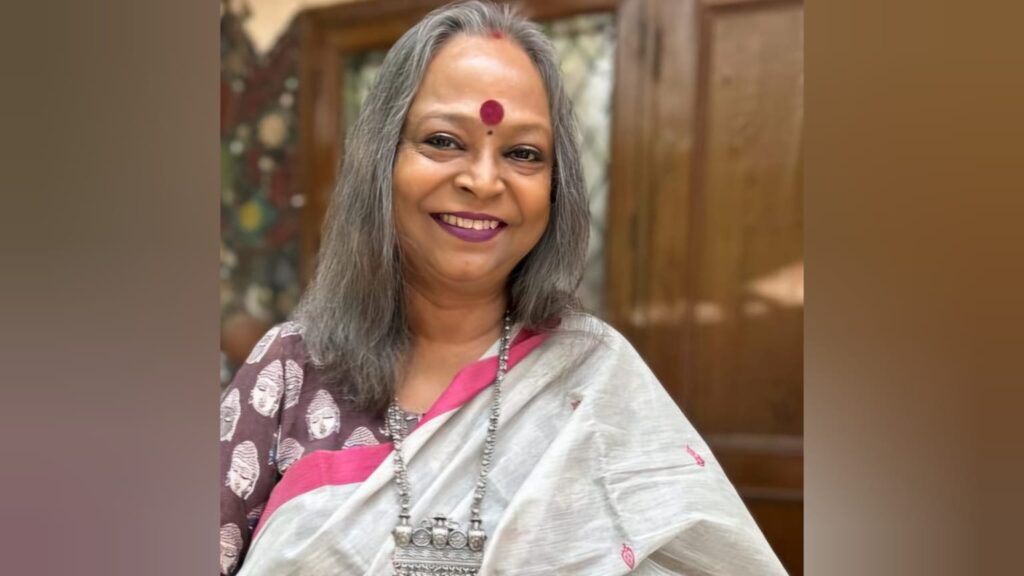
At an age when many are content to slow down, Reena Mukherjee chose to begin again. Based in New Delhi, the former HR professional from NTPC Ltd. transformed her post-retirement years into a deeply purposeful culinary journey—one that has since positioned her as a compelling voice in India’s sustainable, heritage-driven food movement.
Reena’s formal entry into the culinary world came in 2018, when she stepped into competitive cooking. Her intuitive understanding of traditional Indian cuisine quickly earned recognition. That year, she won the Delhi/NCR Regional Cooking Competition, followed by a National Culinary Contest focused on Indian celebratory food traditions. Organised by the NGO Let’s Give Back and judged by eminent chefs Manjit Gill and Rakesh Sethi, the accolades marked a decisive turning point. As Reena often remarks, there was “no looking back.”
What followed was a sustained immersion into India’s vast and layered food heritage. Reena began researching regional cuisines, ancestral cooking methods, and forgotten recipes that once formed the backbone of everyday Indian meals. Over time, she emerged as a respected figure within culinary circles, admired not only for her skill but for her belief that traditional Indian food systems are, by design, environmentally sustainable.
For several years, Reena has served as Chief Coordinator of the National Cookery Contest organised by Let’s Give Back. The initiative focuses on reviving lost and lesser-known recipes from across the country. Her role involves travelling extensively, coordinating events, working closely with participants, and serving on jury panels. She has also been instrumental as editor of the contest’s recipe compilations, ensuring these rare culinary traditions are documented and preserved for future generations.
At the heart of Reena’s advocacy lies her deep engagement with Bengali cuisine, which she describes as a living model of sustainable food practice. Traditional techniques such as shukto, bhaja, jhol, fermentation, and sun-drying prioritise whole-ingredient use and ecological balance. The cuisine is predominantly plantforward, with animal proteins used sparingly and thoughtfully. Through these principles, Reena challenges extractive eating habits and promotes a diet that is both nutritionally rich and environmentally restrained.
She brings this philosophy to life through intimate home pop-ups centred on traditional Bengali food, as well as collaborations with restaurants. These are not merely dining experiences but curated lessons in culinary wisdom. A simple bottle gourd, for instance, may appear in multiple forms—its flesh as the main dish, complemented by preparations using the peel, tender stems, or leaves— demonstrating how earlier generations maximised nourishment while wasting nothing.
Through such meals, dining becomes an act of ecological awareness. Guests leave not only satisfied, but enlightened, carrying with them a renewed respect for the intelligence embedded in traditional cooking. In Reena Mukherjee’s kitchen, cooking is far more than sustenance. It is environmental communication, cultural continuity, and quiet resistance. By reintroducing Bengal’s culinary wisdom into contemporary spaces, she invites us to view sustainability not as a trend or compromise, but as an inherited responsibility—one that continues to nourish both people and the planet.